The Archbishop's Palace Museum
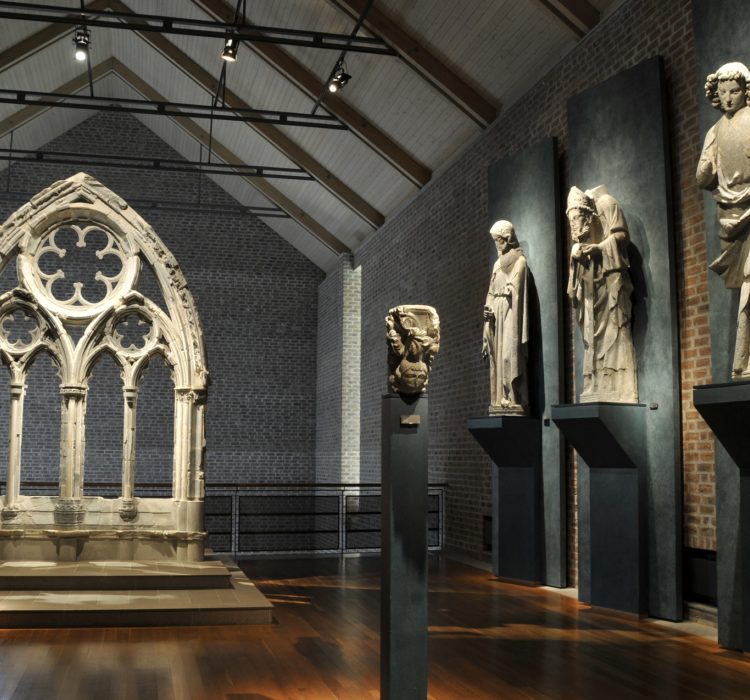
At the Archbishop’s Palace Museum, visitors can experience original sculptures from Nidaros Cathedral and see some of the most significant finds from the archaeological excavations carried out at the Archbishop’s Palace in the 1990s.
Together with Nidaros Cathedral, the Archbishop’s Palace holds a unique place in Norwegian history. The Archbishop’s Palace in Nidaros (later Trondheim) served as the residence of the Archbishop and as an administrative centre of Norway until the Reformation.
In 1983, two large wooden buildings at the Archbishop’s Palace were destroyed by fire. The Archbishop’s Palace Museum was built on the site of the fire, where extensive archaeological excavations were conducted over several seasons during the 1980s. A total of 120 archaeologists from 12 countries took part. These excavations are among the largest and most comprehensive ever carried out in Norway, resulting in approximately 160,000 artefacts and more than 100 building remains. Some of the finest and best-preserved objects from the excavations are on display in the museum.
The most remarkable discovery was a series of coin mints – three built one on top of the other. The lowest and best-preserved mint was found to have belonged to Archbishop Gaute Ivarsson. Today, the mint is displayed in the museum exactly as it was found and is the smallest and northernmost mint in the world.
Guided tours of the Archbishop’s Palace Museum
To book a guided tour, please contact us by email at booking.ndr@nidarosdomen.no or by phone at +47 73 89 08 00.
Please note: Your reservation is not confirmed until you have received a reply from us.
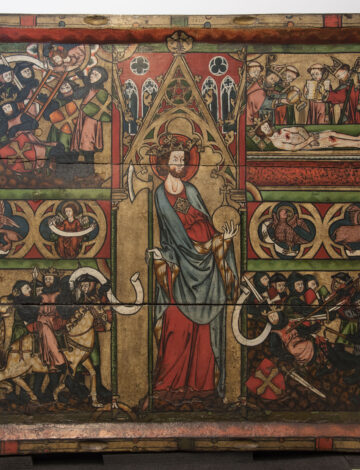
In addition to the archaeological finds, visitors can also experience the sculpture collection from Nidaros Cathedral, as well as the renowned Olav’s Frontal, dating from the first half of the 14th century.